Hedge Trimming and Maintenance in Perth: Keeping Boundaries Neat Year-Round
Expert hedge trimming in Perth & Kinross. Find out when to cut, which hedges suit Scottish weather, and how to keep yours looking sharp all year.

Hedges in Perth Gardens: More Than Just a Border
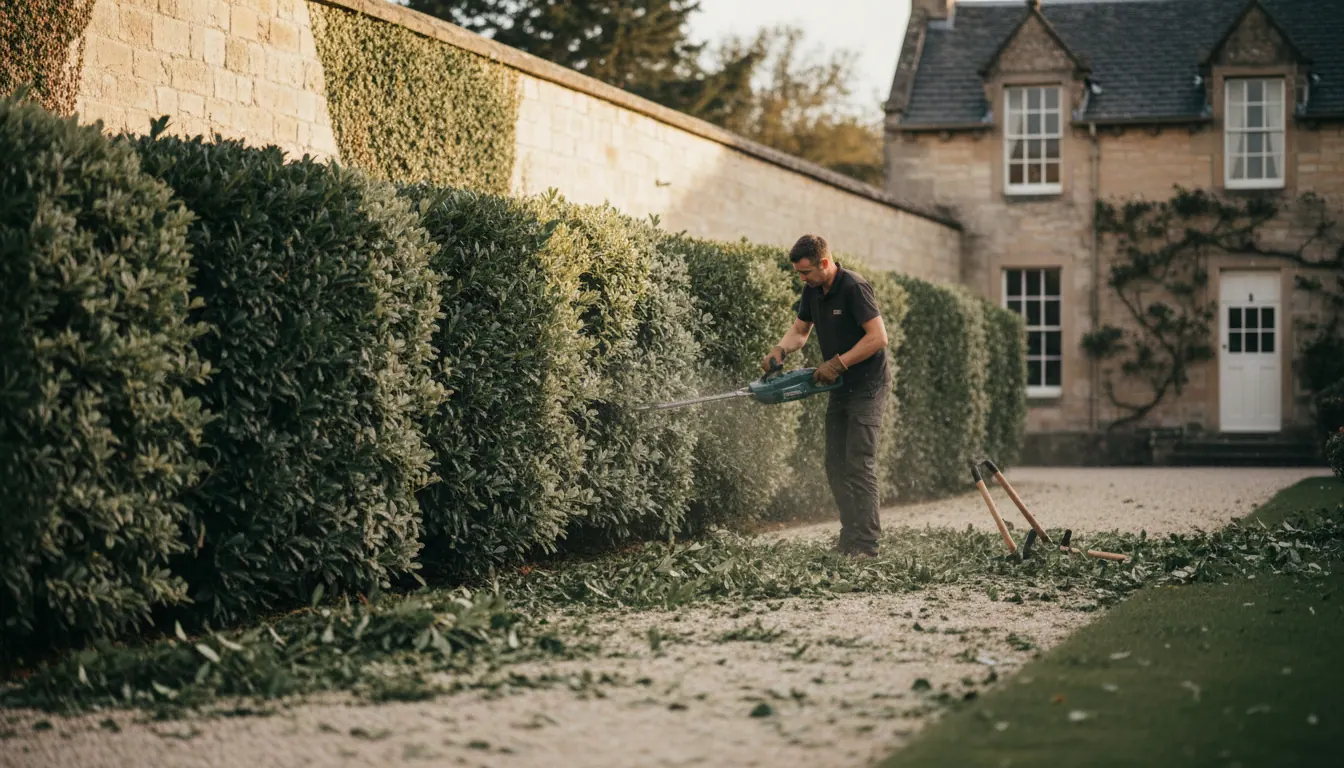
A well-kept hedge does a lot of work. It screens your garden from the road, softens a fence line, gives wildlife somewhere to shelter and, when it is properly trimmed, it makes the whole garden look cared for. But hedges in Perth and its surrounding districts can get away from you quickly. Our wet springs and mild autumns mean growth is often stronger here than people expect, and a hedge that looked fine in April can be a shaggy wall of green by August.
We trim hedges right across Perth and the surrounding areas, including Letham, Tulloch, Craigie, Cherrybank, Bridgend, Kinnoull and North Muirton. Whether you have a low box edging around a formal border or a tall mixed native hedge running the length of your garden, the same principles apply: the right timing, the right technique, and a clean finish.
When to Trim Hedges in Perth
Timing matters more than most people realise, and getting it wrong can mean a hedge that looks rough all year or one that struggles to recover.
Late spring, after nesting season. Most hedges in Scotland are home to nesting birds from roughly March through to the end of July. We always check before we cut, and we would encourage any homeowner to do the same. A hedge disturbed mid-nest can cause real harm, and it is simply not worth it.
Late summer, around August. This is the sweet spot for most formal hedges. Growth has slowed but the hedge will still put on a little more before the cold arrives, which helps it recover from the cut and go into winter looking tidy rather than ragged.
Early autumn, September into October. A light tidy at this point works well for hedges that have a second flush of growth. It is also a good time to cut back anything that has grown into a path or is overhanging a fence.
What to avoid. Cutting hard in late autumn or winter risks leaving fresh growth exposed to frost. Perth winters can be sharp, particularly in the higher parts of the city and in more exposed gardens in Kinnoull or out towards Cherrybank. Frost on freshly cut growth can scorch tips and cause dieback. We generally recommend holding off any hard cutting once we are past mid-October.
Common Hedges We Trim in Perth Gardens
Not every hedge behaves the same way, and knowing what you have planted helps you get the timing and technique right.
Leylandii. Fast-growing, dense and common across Perth's suburban gardens. Needs at least two cuts a year to stay manageable. Once it gets too tall it becomes very difficult to bring back, so regular trimming is far easier than trying to rescue a neglected one.
Privet. A classic choice in older Perth gardens, especially in areas like Bridgend and North Muirton. Grows quickly in a wet season and benefits from two or three cuts between late spring and early autumn.
Beech and hornbeam. Popular for formal gardens and boundaries. Both hold their dead leaves through winter, which gives some privacy even when growth has stopped. One main cut in late summer usually does the job.
Box. Widely used for low, formal edging and topiary shapes. Slower growing than the others, so one careful cut per year is often enough. Box blight is a real concern in Scotland now, so good airflow around the plants matters.
Hawthorn and mixed native hedges. These are brilliant for wildlife and suit Perth's climate well. Cut once a year, ideally after fruiting has finished in late autumn, so birds can benefit from the berries first.
Can You Cut a Box Hedge Hard?
This is a question we get regularly. Box is often used in formal garden designs across Perth, and when it starts to look uneven or has grown beyond its intended shape, the temptation is to cut it back hard and start fresh.
You can cut box back quite hard, but it needs to be done at the right time of year and not when the plant is already under stress. Late spring, once the risk of frost has passed, is the safest window. Box recovers well from a hard cut if it is otherwise healthy, has decent soil and gets some moisture after cutting. What it does not recover well from is being cut hard and then hit by a dry spell or a late frost.
If your box hedge has blight, hard cutting alone will not fix it. The affected material needs to be removed, the tools cleaned between plants, and the remaining hedge given space and airflow to recover. We can assess this when we visit.
Low-Maintenance Hedge Options for Perth Gardens
Some hedges are simply more forgiving than others, and if you want something that looks good without constant attention, it is worth thinking carefully about what you plant in the first place.
Yew. Slow to establish but once it is going, yew is one of the most reliable formal hedges you can grow in Scotland. It tolerates hard cutting, recovers well and only needs one trim a year. It suits the climate here perfectly.
Hawthorn. Hardy, fast to establish, good for wildlife and almost impossible to kill. A single annual cut keeps it in shape. It handles wind and exposed sites well, which matters in some of the more open gardens on the edges of Perth.
Holly. Evergreen, dense and very low maintenance once established. Slow-growing enough that you only need to cut it once a year, in late summer. Also provides excellent screening and security.
Beech. Not evergreen in the traditional sense, but it holds its russet leaves through winter, which gives year-round structure. Easy to maintain with one cut per year in late summer.
If you are starting from scratch and want a hedge that suits Perth's climate without demanding a lot of your time, these are the ones we would point you towards. For more ideas on how to work hedges and borders into a wider garden plan, our article on landscape design for Perth homes covers the bigger picture.
What Happens When a Hedge Gets Left Too Long
A hedge that has been neglected for a few years is a different job entirely from one that gets a regular annual cut. Overgrown hedges become dense and woody in the middle, lose their shape and can start to lean or spread into neighbouring gardens. They also become harder to cut safely without proper equipment.
We handle overgrown hedges as part of our garden clearance work too. If your garden has got on top of you, whether it is a hedge that has doubled in size or a whole plot that needs sorting out, we can help. Our piece on garden clearance in Perth goes into more detail on tackling those bigger jobs before the winter sets in.
What Our Customers Say
We take a lot of pride in leaving a garden looking genuinely finished, not just trimmed and left. Here is what one recent customer had to say:
Professional and tidy, cleaned up my whole garden with ease and now designing my garden for next year, couldnt recommend more!
Ahren
That combination of practical work done well and thinking ahead to what the garden could become is exactly what we aim for. Hedge trimming is often the starting point for a wider garden refresh, and we are happy to talk through what else could be done while we are on site.
Frequently Asked Questions About Hedge Trimming in Perth
What is the best low-maintenance hedge for a Perth garden?
For most Perth gardens, yew, hawthorn, holly or beech are the best choices. They all handle Scotland's wet winters and occasional frosts well, need only one cut a year once established, and give good structure without constant attention. If you want something that also supports wildlife, hawthorn is hard to beat.
Is it okay to cut back a box hedge hard?
Yes, but timing is important. Cut hard in late spring once frost risk has passed, and make sure the plant is otherwise healthy. Box recovers well from a hard cut in the right conditions. If the hedge has signs of blight, cutting alone will not solve the problem and you may need to look at airflow and soil health as well.
When is the best time to trim hedges in Scotland?
Late summer, around August, is the main window for most formal hedges in Scotland. A light tidy in early autumn also works well. Avoid cutting hard in late autumn or winter when frost can damage fresh growth. Always check for nesting birds before cutting between March and July.
How often does a hedge need trimming in Perth?
It depends on the type. Fast-growing hedges like privet or leylandii may need two or three cuts a year. Slower hedges like yew, holly or beech usually only need one good cut per year. A regular annual cut is much easier to manage than letting a hedge get out of hand and then trying to bring it back.
Get a Free Quote for Hedge Trimming in Perth
If your hedge needs a tidy, a hard cut or a full reshape, we would be glad to take a look. We serve gardens all across Perth and the surrounding areas, from Letham and Tulloch to Craigie, Cherrybank and beyond. We offer a free, no obligation quote, so there is no pressure, just a straightforward chat about what your garden needs.
Call us to book your free consultation and we will come out and have a look at what needs doing.