Patio Pointing and Repairs in Perth: Keeping Your Outdoor Space Safe and Level
Crumbling patio joints in Perth? We explain why pointing fails, when to repoint, and how our team restores patio slabs across Perth & Kinross.

Crumbling Joints Are More Than Just an Eyesore
Loose, crumbling mortar between your patio slabs is one of those things that is easy to ignore until it becomes a real problem. A few gaps here, a bit of moss creeping in there, and before long the whole surface starts to shift, lift, and let water underneath. In Perth's climate, where wet winters and regular frost are just part of life, that kind of damage moves fast.
We see it constantly across Perth and its surrounding districts: Letham, Tulloch, Kinnoull, Cherrybank, Bridgend, Craigie, North Muirton. A patio that looked perfectly solid a couple of years ago now has joints that crumble when you press them, slabs that wobble underfoot, and weeds pushing up through every gap. It is not a sign that the patio was built badly. It is just what happens when mortar is exposed to years of rain, frost, and freeze-thaw cycles without any attention.
The good news is that repointing is a straightforward fix when it is done properly, and it makes a significant difference to how a patio looks, feels underfoot, and holds up over time.
What Patio Pointing Actually Does
Pointing is the mortar or compound that fills the joints between your patio slabs. Its job is simple but important: it holds the slabs in position, stops water from getting underneath, keeps weeds out, and gives the whole surface a clean, finished look.
When pointing is in good condition, slabs sit firm and level. Water runs off the surface rather than pooling in the joints and working its way down to the bedding layer. Weeds have nowhere to take hold. The patio looks tidy.
When pointing fails, all of that changes. Water gets in. Frost expands it. The bedding layer shifts. Slabs start to rock or sink. The surface becomes uneven and, in some cases, a genuine trip hazard.
Repointing before things get to that stage is always the better option. It is less disruptive, less expensive in the long run, and far easier than lifting and relaying slabs that have moved because the joints were left too long.
Why Perth's Weather Is Hard on Pointing
Perth, Scotland gets a fair amount of rain. Winters are cold, frost is common, and the ground goes through repeated freeze-thaw cycles from late autumn through to early spring. That combination is one of the main reasons pointing deteriorates faster here than in milder parts of the UK.
Water sits in open joints. When temperatures drop below freezing, that water expands. It pushes against the mortar, loosening it gradually. After enough cycles, what was solid mortar becomes powder. The joints open up, more water gets in, and the process accelerates.
Moss and algae make it worse. In shaded gardens, particularly in areas like Kinnoull or the older residential streets around Bridgend, damp conditions mean moss establishes quickly in any gap it can find. Moss roots work their way into crumbling mortar and speed up the breakdown. It also makes the surface slippery, which is a real safety concern on steps or sloped patios.
Getting the joints properly filled and sealed before autumn is the sensible approach. It protects the surface through the wettest, coldest months and means the patio comes through winter in much better shape.
How Long Should Pointing Last?
This is one of the questions we hear regularly. The honest answer is that it depends on the material used, the quality of the original installation, and how much exposure the patio gets to weather.
A well-pointed patio using a good-quality mortar mix, properly prepared and applied, should last several years before it needs attention. Some patios go longer with no issues. Others, particularly those in exposed spots or shaded, damp areas, may need repointing sooner.
What tends to shorten the lifespan of pointing:
- Poor original mix (too weak, too sandy, or applied in wet conditions)
- Joints that were not cleaned out properly before pointing
- Freeze-thaw damage over multiple winters without any maintenance
- Moss and weed growth that was left untreated
- Slabs that were not fully bedded, so they flex underfoot and crack the joints
Regular inspection helps. If you notice joints that crumble when you press them, gaps where weeds are growing freely, or slabs that move when you walk on them, it is worth getting the patio looked at before the problem spreads.
What the Repointing Process Involves
Repointing a patio is not simply a case of pushing new mortar over old. If the old material is not properly removed first, the new pointing will not bond and will fail quickly.
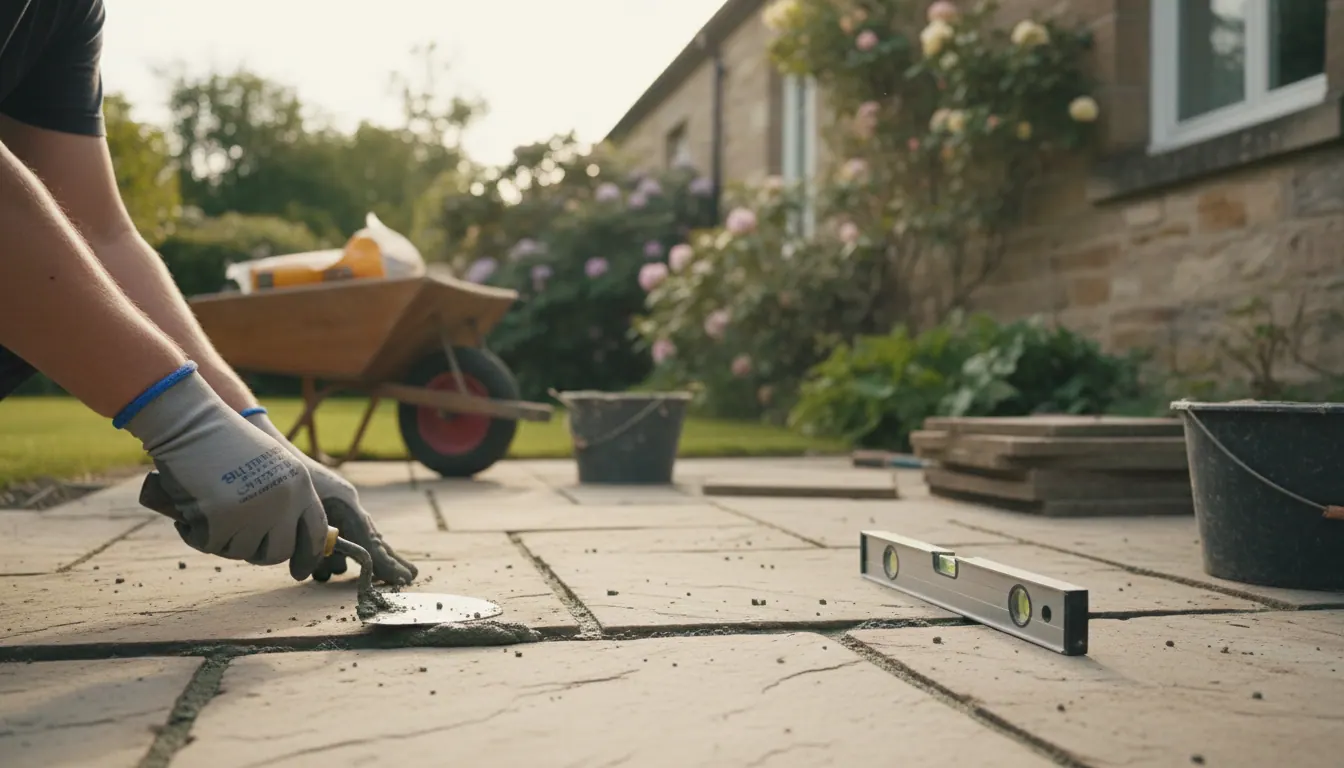
The process we follow starts with raking or cutting out the old, loose mortar from the joints. This needs to go deep enough to give the new pointing something solid to key into. Any debris, moss, or dirt is cleaned out thoroughly. If there are slabs that have shifted or sunk, we address those before repointing, because there is no point filling joints on a surface that is not sitting level.
Once the joints are clean and the surface is ready, we apply the pointing mix and work it into the joints carefully. The finish is pressed and smoothed so it sits slightly below the slab edge, which helps water run off rather than pool. Any excess is cleaned from the slab faces before it sets.
The result is a surface that looks neat, sits firm, and is properly protected against the weather.
If your patio has also picked up a layer of algae, moss, or general grime, power washing before or after repointing makes a real difference to the finished look. We offer power washing as part of our services, so it is straightforward to combine both in a single visit.
Signs Your Patio Needs Repointing
Not sure whether your patio needs attention? Here are the things to look out for:
- Joints that crumble or come away when you press them with a finger
- Visible gaps between slabs where mortar has fallen out
- Weeds growing up through the joints
- Slabs that rock or feel loose underfoot
- Water pooling in the joints rather than running off
- Moss or algae established along the joint lines
- A generally tired, patchy appearance to the surface
If your patio ticks several of those boxes, it is worth getting it looked at sooner rather than later. Left through another Perth winter, the damage will only go further.
Repointing as Part of a Wider Patio Tidy-Up
Repointing often comes as part of a broader patio refresh. We regularly combine it with a thorough clean, some attention to the edges and borders, and occasionally a review of whether any slabs need to be lifted and re-bedded properly.
If the garden around the patio has also got away from you, that is something we can help with at the same time. Overgrown borders, a neglected lawn, or a garden that has become hard to manage are all things we deal with regularly. Our garden clearance service covers exactly that kind of work, and combining it with patio repointing in a single visit makes practical sense.
Frequently Asked Questions
How do I know if my patio needs repointing rather than a full relay?
If the slabs themselves are in good condition and sitting reasonably flat, repointing is usually the right fix. If slabs have sunk significantly, are cracked, or the bedding layer underneath has broken down, a partial or full relay may be needed. We can assess this when we visit and give you a straightforward answer.
How long does pointing last on a patio in Perth?
A properly done repointing job using a suitable mortar mix should last several years. The exact lifespan depends on the material used, the amount of shade and moisture the patio gets, and how well the original joints were prepared. Patios in exposed or very damp spots may need attention sooner. Regular inspection, particularly after winter, helps catch any deterioration early.
Can I repoint my patio myself?
It is possible to tackle repointing as a DIY job, but it is easy to get wrong. The most common mistake is not cutting out the old mortar deeply enough, which means the new pointing does not bond properly and fails quickly. Getting the mix right matters too: too wet and it shrinks and cracks; too dry and it will not key in. For a patio that is going to last, having it done properly by someone who knows what they are doing is the more reliable option.
How do you remove old pointing from patio joints?
Old pointing is raked or cut out using a grout rake, angle grinder, or chisel depending on how hard the existing mortar is. The aim is to get back to sound material and clean the joint out thoroughly before any new pointing goes in. Trying to apply new mortar over old loose material is the main reason DIY repointing fails.
Get a Free, No-Obligation Quote
If your patio joints are looking tired, crumbling, or full of weeds, we are happy to come and take a look. We cover Perth and all its districts, including Letham, Craigie, Tulloch, Cherrybank, Bridgend, Kinnoull, and North Muirton. We offer a free consultation and a free, no-obligation quote once we understand what the job involves. Professional. Reliable. Local. Proudly serving Perth & Kinross.
Call us on 07340 638988 to arrange a visit at a time that suits you.