How to Scarify Your Perth Lawn in Autumn: When and Why
How and when to scarify a lawn in Perth, Scotland: timing, preparation and recovery, so your lawn looks its best all year round.

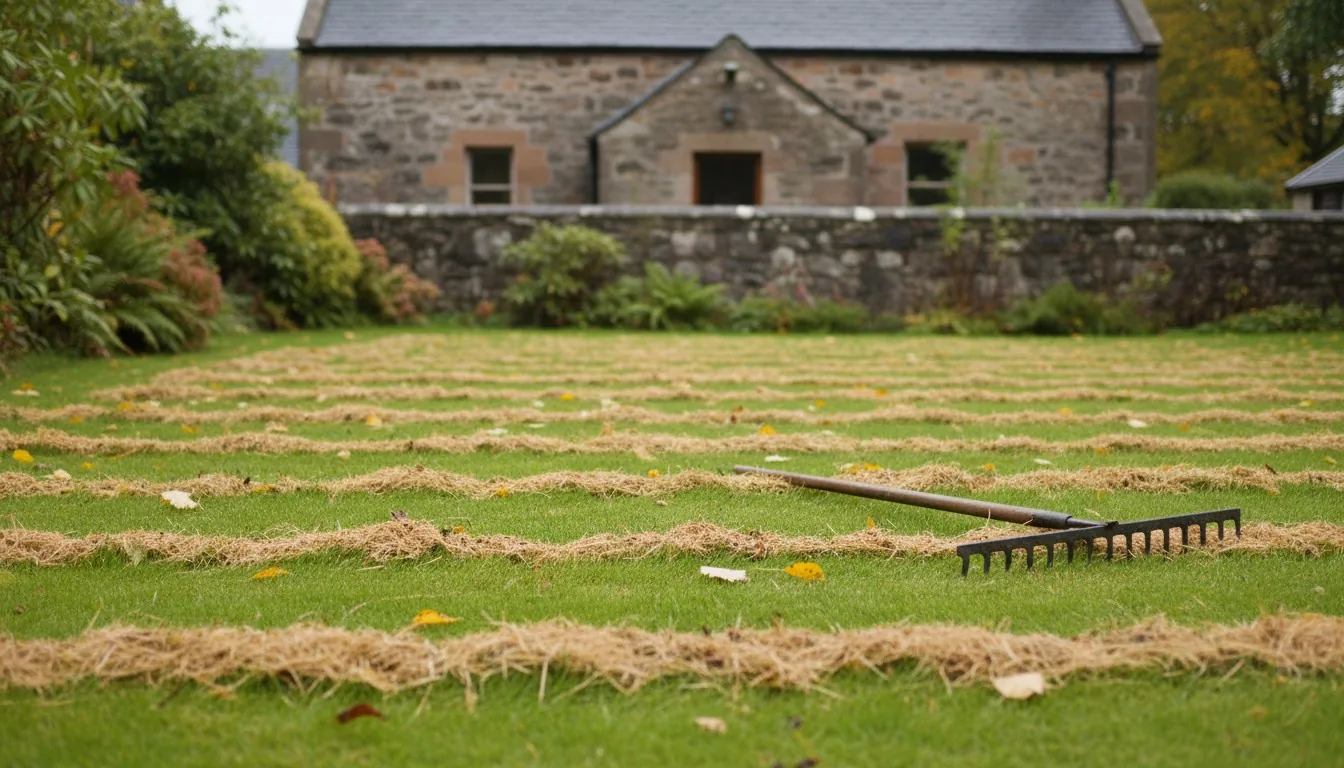
A thick, mossy lawn is a common problem across Perth
Moss and thatch build up quietly. You might not notice the damage until spring arrives and your lawn looks more grey-green than lush. It is a common sight in gardens right across Perth, from Craigie and Cherrybank to North Muirton. The wet winters here, combined with heavier soils in some areas and the shade from established trees, create perfect conditions for thatch to accumulate and moss to take hold.
Scarifying is the answer. It is not glamorous work, but done at the right time and in the right way, it transforms a tired, spongy lawn into something genuinely worth looking at.
What scarifying actually does
Scarifying is the process of removing the layer of dead grass, moss and organic debris (thatch) that builds up between the soil surface and the green growth above it. A scarifier uses rotating blades or tines to cut into that layer and rake it out.
A thin layer of thatch is not a problem. It can actually protect the soil. But when it builds up beyond a centimetre or so, it starts to block water, air and nutrients from reaching the grass roots. The lawn becomes spongy underfoot, holds moisture on the surface and becomes a perfect home for moss.
After scarifying, the lawn looks rough. That is normal and expected. What follows, given the right care, is a much healthier, thicker lawn that drains better and resists moss more effectively.
When to scarify a lawn in Perth
Timing is everything with scarifying, and getting it right matters especially here in Scotland where the growing season is shorter and winters are wetter than much of the UK.
The best time to scarify a lawn in Perth is late summer to early autumn, typically August through to mid-October. At that point the soil is still warm from summer, there is usually decent rainfall, and the grass has several weeks of active growth ahead of it before the cold sets in. That recovery window is important. Scarifying puts the lawn under stress, and it needs time to fill back in before the first frosts arrive.
Spring scarifying is possible, but a lighter touch is better in spring. A gentle raking to lift moss and surface debris is fine. Deep scarifying in early spring can set the lawn back just as it is trying to grow, and if a cold snap follows, recovery slows considerably.
Avoid scarifying in summer drought conditions or during a hot dry spell. Stressed grass does not recover well.
When NOT to scarify
There are a few situations where scarifying will do more harm than good.
- In a drought or dry spell. The lawn is already under stress and cannot recover quickly.
- In late autumn or winter. Once soil temperatures drop, grass growth slows to a crawl. Scarifying then leaves the lawn open and vulnerable through the coldest months.
- On a newly turfed or seeded lawn. Give new grass at least a full growing season, ideally longer, before you put it through the stress of scarifying.
- When the lawn is waterlogged. Working on saturated ground damages soil structure and makes a mess of the lawn surface.
How to prepare your lawn before scarifying
Getting the preparation right makes a real difference to the result.
Cut the grass shorter than usual. In the weeks before scarifying, gradually reduce your mowing height. The grass should be cut down to around 3 to 4 centimetres before you scarify. Do not scalp it, but a shorter cut means the scarifier can get to the thatch layer more effectively without the blades being clogged by long grass. A good rule of thumb is to drop the mowing height by one notch each cut over two or three mows rather than cutting it all at once.
Treat moss beforehand if needed. If there is significant moss, applying a moss treatment a few weeks before scarifying helps. Dead moss is easier to remove than live, springy moss that just bounces back off the tines.
Do not fertilise immediately before scarifying. Wait until after the job is done, then feed the lawn to support recovery.
What to expect after scarifying
The lawn will look rough. That is the honest truth, and it catches people off guard every time. After scarifying, the surface looks patchy, thin and a bit battered. Piles of dead material come out. The colour looks uneven.
This is normal. It is not a sign that something has gone wrong.
Within two to four weeks, depending on the weather and the condition of the lawn beforehand, new grass growth starts to fill in. The lawn begins to look greener and more even. By the following spring, the difference is usually clear: a denser, healthier sward that holds its colour better through the wet months.
To support recovery after scarifying, it helps to follow up with:
- Overseeding. Spreading fresh grass seed into the bare patches helps the lawn fill in faster. Choose a seed mix suited to the conditions, whether that is a shaded area, a high-traffic family garden or a lawn that gets a lot of wear.
- Top dressing. A light application of lawn dressing (a mix of sand, loam and compost) worked into the surface helps level minor hollows and improves soil structure over time.
- Feeding. An autumn lawn feed with the right nutrient balance supports root development through the cooler months.
Scarifying as part of a wider lawn care plan in Perth
Scarifying on its own is useful, but it works best as part of a broader approach to lawn care. A lawn that is regularly maintained, mowed at the right height, aerated where needed and fed through the season will need less intensive scarifying over time.
For Perth homeowners, the key seasonal tasks are:
- Spring: Light raking, first feeds, overseeding bare patches from winter wear.
- Summer: Regular mowing, watering during dry spells, keeping edges tidy.
- Autumn: Scarifying, overseeding, top dressing, autumn feed.
- Winter: Keep off the lawn when it is frosted or waterlogged. Minimal intervention.
If your lawn has been neglected for a few years, one round of scarifying may not be enough. A heavily thatched, mossy lawn often benefits from two seasons of treatment before it fully recovers, and some lawns are better replaced altogether.
When a tired lawn needs more than scarifying
Scarifying is a job many homeowners tackle themselves with a hired machine. The key is setting the depth carefully: too shallow and it barely touches the thatch, too deep and it damages the grass roots and soil. Where we can help is with the rest of the lawn's year, and with lawns that are past saving.
- Garden maintenance. Regular mowing at the right height and neat edges through the growing season help stop thatch and moss building up again.
- Turfing. If a lawn is more moss than grass, badly uneven or constantly waterlogged, new turf laid on properly prepared ground is often the better fresh start.
- Garden clearance. If the lawn has disappeared under overgrowth, clearing the garden back is the first step.
Proudly serving Perth & Kinross, from Letham and Tulloch to Bridgend and Kinnoull. Transforming outdoor spaces, every time.
Frequently asked questions about scarifying lawns in Perth
When is the best time to scarify a lawn in Perth, Scotland?
Late summer to early autumn is ideal, from around August through to mid-October. The soil is still warm, the grass is actively growing, and there is enough of the season left for the lawn to recover before winter. Spring scarifying is possible but should be lighter and less aggressive.
Will my lawn recover after scarifying?
Yes. It looks rough immediately afterwards, but that is expected. With overseeding, a light top dressing and an autumn feed, most lawns recover well within a few weeks. Heavily thatched or mossy lawns may need more than one season of treatment to fully come good.
How short should the grass be before scarifying?
Cut it down to around 3 to 4 centimetres. Reduce the mowing height gradually over two or three cuts rather than dropping it all at once. Shorter grass allows the scarifier to reach the thatch layer more effectively.
When should you not scarify a lawn?
Avoid scarifying during drought, in late autumn or winter, on a newly laid lawn, or when the ground is waterlogged. In all these cases the lawn either cannot recover properly or the scarifying will cause more damage than it fixes.
Get a free, no-obligation quote
If your Perth lawn is looking mossy, spongy or just a bit tired, we are happy to take a look and talk through what it needs. We offer a free consultation with no pressure and no obligation.